
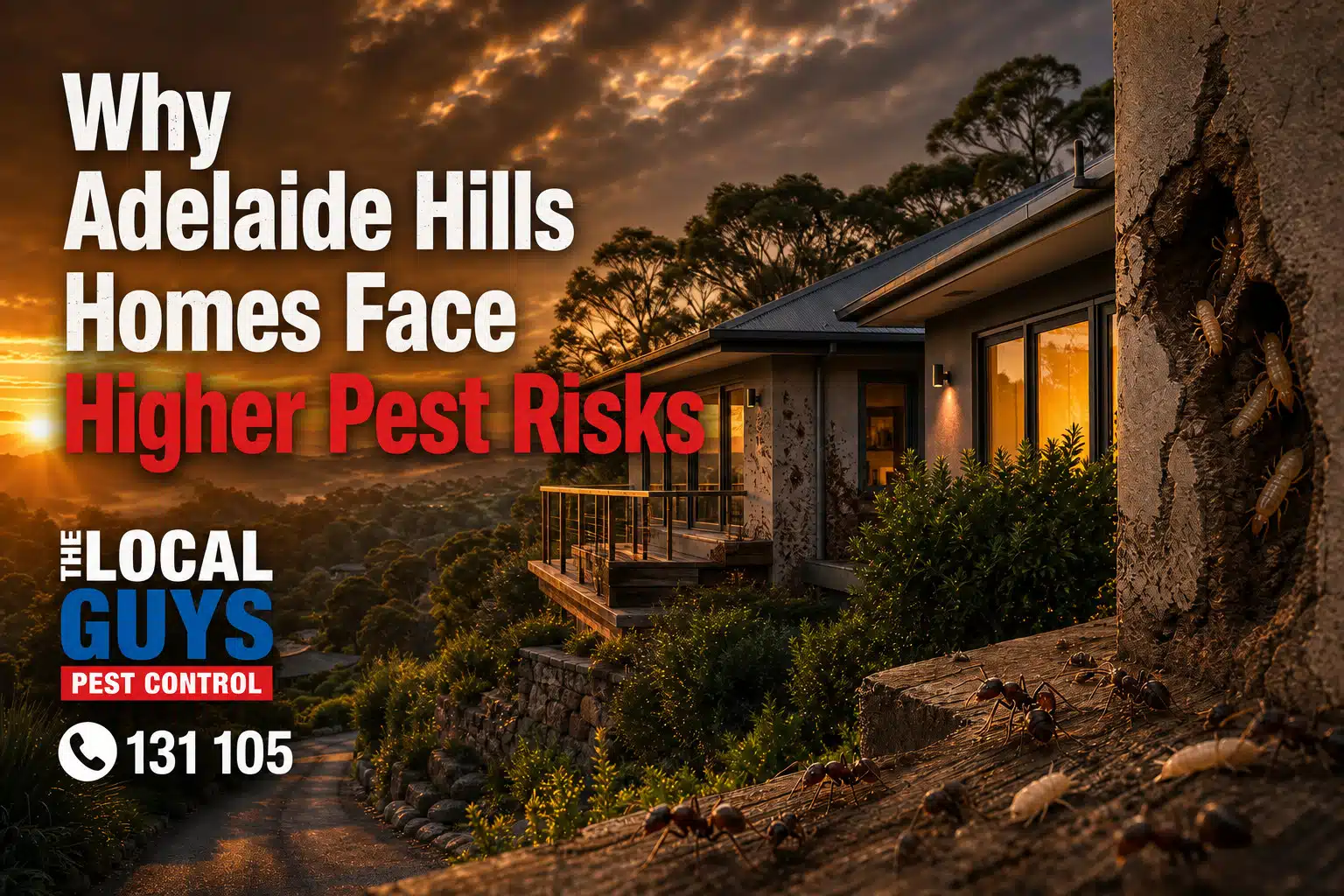
Living in the Adelaide Hills has plenty of advantages. There's the cooler weather, beautiful scenery, larger gardens and the feeling of being away from the busy city. Whether you live in Stirling, Hahndorf, Mount Barker or one of the smaller surrounding communities, it's easy to see why people enjoy calling the Hills home.
However, the same natural surroundings that make the Adelaide Hills appealing can also create conditions that attract unwanted pests. Homes surrounded by vegetation, older properties with timber structures and houses near bushland may experience pest problems that differ from those in metropolitan Adelaide.
Termites, rodents, spiders and European wasps are among the pests homeowners may encounter. Some are simply a nuisance, while others can damage property or create safety concerns if left unmanaged.
Understanding what attracts these pests and recognising the early warning signs can help you protect your property before a minor problem becomes more serious.
This guide explains why pest problems occur in the Adelaide Hills, which pests to watch for and what you can do to reduce the risks. If you're already dealing with an infestation, The Local Guys provides professional pest control services in Adelaide, including surrounding Hills communities.
Why Do Adelaide Hills Homes Face Different Pest Problems?
The Adelaide Hills has a different environment from much of metropolitan Adelaide. Many areas receive more rainfall, experience cooler temperatures and have properties surrounded by established trees, gardens and native vegetation.
These conditions can influence where pests find food, moisture and shelter. However, living in the Hills doesn't automatically mean your home is more likely to experience every type of infestation. Pest risks depend on the property's construction, maintenance, surrounding environment and previous pest activity.
Native Vegetation and Bushland
Bushland and established gardens provide natural habitats for insects, rodents and other animals. Properties located near these environments may experience more movement between outdoor areas and buildings.
For example, termites naturally occur in environments containing timber and other cellulose materials. While they're an important part of the ecosystem, some species can become a serious problem when they reach structural timber.
Rodents may also shelter in dense vegetation and move closer to homes when food and suitable nesting areas are available.
If your property borders bushland or has substantial vegetation, regularly checking the areas around your home can help you identify conditions that may encourage pest activity.
Older Homes and Timber Construction
The Adelaide Hills contains a mixture of older cottages, character homes, modern houses and rural properties.
Some older buildings have timber floors, subfloor spaces, ageing seals and construction features that can provide entry points or shelter for pests.
However, newer homes aren't automatically protected. Termites can affect buildings of different ages and construction types, while rodents can enter through relatively small openings.
Regular maintenance and inspections are more useful than relying on the age of a property to estimate pest risk.
Cooler Winters and Higher Rainfall
The Adelaide Hills generally experiences cooler and wetter conditions than Adelaide's coastal plain.
During colder periods, rodents may seek shelter in roof cavities, garages, sheds and other protected spaces. Moisture around buildings can also influence insect activity and create conditions favourable to certain pests.
Blocked gutters, leaking pipes, poor drainage and damp timber are worth paying attention to, particularly after periods of heavy rainfall.
Addressing these conditions helps protect the building itself while also making the property less attractive to pests.
Common Pest Problems in the Adelaide Hills
Different pests are attracted to different conditions, so understanding what you're dealing with is an important first step.
The table below summarises some of the common pest concerns for Adelaide Hills homeowners.
| Pest | Why It Can Become a Problem | Areas to Check |
|---|---|---|
| Termites | Moisture, accessible timber and suitable environmental conditions | Subfloors, foundations, timber structures and garden areas |
| Rats and mice | Food sources, shelter and potential entry points | Roof cavities, garages, sheds and storage areas |
| Redback spiders | Protected areas where webs can remain undisturbed | Sheds, outdoor furniture, retaining walls and stored materials |
| European wasps | Available food sources and suitable nesting locations | Gardens, outdoor entertaining areas and wall cavities |
| Ants | Food, moisture and access to buildings | Kitchens, bathrooms, external walls and garden areas |
Although these pests can be found throughout South Australia, the conditions around an individual Adelaide Hills property may influence how frequently they appear.
1. Termites in Adelaide Hills Homes
Termites are one of the more serious pest concerns for homeowners because some species can cause extensive damage to structural timber.
Subterranean termites live in colonies and can travel through soil or concealed pathways to reach suitable food sources. This means termite activity may not be visible from outside the home.
Properties surrounded by vegetation, containing timber close to the ground or experiencing ongoing moisture problems may have conditions that warrant particular attention.
Signs of Termite Activity
Termites can be difficult to detect without professional equipment and experience. However, there are several warning signs homeowners should know.
These include:
- Mud tubes along foundations or walls
- Timber that sounds hollow when tapped
- Damaged skirting boards or door frames
- Changes to flooring or timber surfaces
- Discarded wings from termite swarmers
- Unusual timber damage around damp areas
Not every sign of damaged timber indicates termites. Moisture, fungal decay and other problems can produce similar symptoms.
If you suspect termite activity, avoid disturbing the affected area or applying household insect sprays. Disturbing termites can make it more difficult to assess and manage the infestation.
For information about professional inspections and available management methods, visit our termite treatment Adelaide page.
How Often Should Adelaide Hills Homes Have Termite Inspections?
There's no single inspection schedule that's appropriate for every Adelaide Hills property.
Inspection frequency depends on several factors, including the building's construction, surrounding vegetation, moisture conditions, previous termite activity and any existing termite management system.
For many Australian homes, annual professional termite inspections are commonly recommended. However, properties with higher risk factors may require more frequent inspections based on professional advice.
A qualified timber pest inspector can assess your property and recommend a suitable schedule consistent with relevant Australian Standards and the property's individual risk.
The important thing is not to wait until visible damage appears before arranging an inspection.
2. Rats and Mice in Adelaide Hills Properties
Rodents are another concern for some Adelaide Hills homeowners, particularly during cooler weather.
As temperatures drop, rats and mice may look for sheltered places where they can find warmth, food and protection from the elements.
Roof cavities, wall spaces, garages, sheds and storage areas can provide suitable environments when access points are available.
Properties with fruit trees, poultry, compost bins or accessible animal feed may also provide food sources that attract rodents.
Signs of a Rodent Infestation
You might notice scratching noises coming from the ceiling at night or discover droppings in cupboards, garages or storage areas.
Other common signs include:
- Gnaw marks on food packaging
- Damaged electrical wiring
- Unpleasant smells in enclosed spaces
- Nesting materials in roof cavities
- Small openings around external walls
- Repeated rodent sightings around buildings
Rodents can contaminate food and damage building materials. They may also create electrical hazards if they chew through wiring.
If you notice these signs, it's worth investigating early rather than allowing the problem to continue.
Our rodent control services in Adelaide can help identify activity, assess potential entry points and recommend appropriate management options.
How to Reduce Rodent Problems
Preventing rodents from entering a property is often more effective than relying on trapping or baiting alone.
Store food and animal feed in secure containers, keep rubbish bins closed and avoid leaving pet food outside overnight.
Check accessible areas around the building for gaps, damaged vents and openings around pipes.
You should also maintain vegetation near the house and avoid allowing unnecessary materials to accumulate around sheds or garages.
If rodents are already inside the building, professional advice can help determine the safest and most suitable approach.
3. Redback Spiders Around Adelaide Hills Homes
Redback spiders can be found throughout South Australia, including the Adelaide Hills.
They often establish webs in sheltered outdoor locations where they are unlikely to be disturbed.
Common hiding places include garden sheds, retaining walls, outdoor furniture, pot plants and stored building materials.
Although redbacks generally avoid contact with people, bites can cause significant symptoms and may require medical assessment.
How to Reduce Spider Activity
Keeping outdoor storage areas organised can make it easier to identify and remove suitable spider hiding places.
Wear gloves when handling materials that have been stored outside, and check outdoor furniture before use.
Regularly remove unnecessary clutter and inspect areas where spiders have previously been found.
If you're dealing with repeated spider activity or are concerned about potentially dangerous species, professional pest control may be appropriate.
For help understanding different spider species, read our guide to the 12 common spiders in Australia.
If a suspected redback bite occurs, follow current Australian first-aid guidance and seek medical advice where appropriate.
4. European Wasps in the Adelaide Hills
European wasps can become particularly noticeable during the warmer months, especially around outdoor entertaining areas, gardens and places where food is available.
They may be attracted to meat, sweet drinks, fallen fruit and uncovered rubbish.
Unlike some other wasps, European wasps can establish nests in concealed locations, including underground cavities and sheltered parts of buildings.
A nest may contain large numbers of wasps, making attempts to remove it without appropriate training and equipment dangerous.
Signs of a European Wasp Nest
One of the most useful things to observe is repeated wasp movement.
If several wasps consistently fly towards the same hole in the ground, wall cavity or garden structure, there may be a nest nearby.
Other signs include increased activity around outdoor food areas and frequent wasp sightings close to one particular location.
Avoid blocking suspected nest entrances or attempting to remove a nest yourself.
If you're concerned about wasp activity, arrange an assessment by a suitably qualified pest control professional.
How to Make Outdoor Areas Less Attractive to Wasps
Keep outdoor rubbish bins closed, clean up food scraps after entertaining and remove fallen fruit from garden areas.
Avoid leaving sweet drinks or uncovered food outside for extended periods.
If wasps become aggressive or appear to be nesting close to areas used by people or pets, keep your distance and seek professional assistance.
5. Ant Problems in Adelaide Hills Homes
Ants are common around gardens, patios and outdoor areas, but they can become frustrating when they repeatedly enter kitchens and bathrooms.
They often follow established trails to reach food or moisture.
Changes in weather can influence their activity, particularly when outdoor conditions become less suitable or new food sources are available indoors.
How to Prevent Ants From Entering Your Home
Start by identifying where ants are entering and what they're being attracted to.
Clean up food crumbs, store pantry items in sealed containers and address leaking taps or other moisture problems.
Check gaps around windows, doors and plumbing penetrations where ants may enter.
If ants continue returning despite these measures, professional treatment may be needed to address the colony rather than just the visible trail.
How Does Pest Control in the Adelaide Hills Work?
Professional pest control begins with understanding the problem rather than simply applying treatment around the property.
A technician should assess the type of pest, identify areas of activity and consider conditions that may be contributing to the infestation.
For Adelaide Hills properties, this may include looking at vegetation near buildings, accessible subfloor spaces, moisture conditions, outbuildings and potential entry points.
The inspection findings help determine which treatment methods are suitable.
Professional Termite Inspections and Treatments
Termite inspections may involve assessing accessible internal and external areas, roof spaces, subfloors and areas where timber is exposed to moisture.
Depending on the property and inspection requirements, technicians may use suitable tools to help identify concealed activity.
If termites are found, treatment options may include termite baiting systems, chemical soil treatments or other management methods appropriate to the situation.
The recommended treatment depends on the termite species, building construction, site conditions and relevant standards.
A technician should explain the proposed approach, ongoing monitoring requirements and any warranty conditions before work begins.
General Pest Control Treatments
General pest control may involve targeted treatments for spiders, ants, cockroaches and other household pests.
Depending on the infestation, the technician may recommend treatment around specific hiding places, internal areas or external building perimeters.
Not every property requires treatment in the same locations.
A professional should also explain any preparation needed before treatment and provide instructions for keeping children and pets away from treated areas where required.
Rodent Management
Rodent management can involve trapping, appropriately secured bait stations, entry-point identification and recommendations for reducing access to food and shelter.
The most suitable approach depends on the property, infestation and potential risks to people, pets and wildlife.
For properties near bushland, selecting appropriate control methods is particularly important because non-target animals may also be present.
Follow-up monitoring may be recommended to assess whether rodent activity has reduced.
How Much Does Pest Control Cost in the Adelaide Hills?
The cost of pest control in the Adelaide Hills depends on the pest involved, property size, extent of the infestation and treatment method required.
A standard residential property may need a relatively straightforward treatment, while a larger property with multiple buildings or difficult access points may require more extensive work.
Termite inspections and treatments are generally priced separately from routine pest management because they involve specialised assessment and management methods.
What Affects Pest Control Pricing?
| Factor | Why It Matters |
|---|---|
| Property size | Larger properties may require more inspection and treatment time |
| Pest type | Different pests require different treatment methods |
| Infestation severity | Established infestations may require additional work |
| Accessibility | Roof spaces, subfloors and outbuildings may affect the service |
| Treatment method | Some treatments require specialised equipment or ongoing monitoring |
| Follow-up requirements | Additional inspections or treatments may affect the total cost |
When requesting a quote, ask what areas will be inspected or treated, whether follow-up visits are included and what warranty conditions apply.
For an accurate estimate, contact The Local Guys Pest Control Adelaide and explain your property's location and the pest problem you're experiencing.
How to Choose a Licensed Pest Controller in South Australia
Choosing a pest control provider involves more than comparing prices.
You should feel confident that the technician is appropriately qualified, understands the problem and can explain the recommended treatment.
In South Australia, pest management licensing is administered by SA Health under the applicable state legislation.
Businesses and technicians performing regulated pesticide work must hold the relevant licences or authorisations for their activities.
You can find official information about licensing through SA Health.
Before booking, consider asking:
- Is the technician appropriately licensed for the treatment?
- Does the business have public liability insurance?
- What areas of my property will be inspected?
- What treatment method do you recommend?
- Will I receive a written service report?
- Are follow-up visits included?
- What warranty conditions apply?
- Do you regularly work on properties with similar conditions?
For Adelaide Hills properties, it's also useful to ask whether the technician has experience dealing with rural or bushland-adjacent homes.
A good pest controller should explain the treatment clearly and help you understand what can realistically be achieved.
How to Reduce Pest Risks Around Your Adelaide Hills Property
You can't eliminate every pest from the surrounding environment, particularly when living near bushland and established vegetation.
However, there are practical things homeowners can do to make their properties less attractive to pests.
Keep Vegetation Away From Buildings
Trim plants where appropriate and avoid allowing dense vegetation to grow directly against external walls.
This can make it easier to inspect the building and identify potential pest activity.
Manage Moisture Problems
Fix leaking taps, clear blocked gutters and investigate areas where water consistently collects near foundations.
Persistent moisture can contribute to building deterioration and create conditions attractive to certain pests.
Store Timber Carefully
Avoid storing firewood or unused timber directly against the house.
Where practical, keep stored materials off the ground and away from building foundations.
This makes inspections easier and reduces concealed areas where pests may shelter.
Seal Entry Points
Check accessible openings around doors, windows, vents and service penetrations.
Suitable repairs can help reduce rodent access and limit the entry of some household insects.
Avoid blocking essential ventilation, drainage or termite inspection zones.
Maintain Outdoor Storage Areas
Garden sheds, garages and storage areas can provide shelter for rodents and spiders.
Keep materials organised, remove unnecessary clutter and inspect stored items before moving them indoors.
Arrange Inspections When Needed
If your property has a history of termite activity, recurring rodent problems or other persistent pest issues, ask a licensed professional about an appropriate inspection and prevention schedule.
Regular inspections can help identify problems before they become more difficult to manage.
Frequently Asked Questions About Adelaide Hills Pest Problems
Why Are Termites a Concern in the Adelaide Hills?
Some Adelaide Hills properties have environmental and structural conditions that may increase termite risk, including moisture, accessible timber and surrounding vegetation. However, risk varies between properties. Professional inspections can help identify termite activity and conditions that may contribute to future problems.
Are Rodents More Common During Winter in the Adelaide Hills?
Rats and mice may become more noticeable inside buildings during cooler months as they seek shelter and food. However, rodents can remain active throughout the year. Properties with accessible food, sheltered spaces and entry points may experience recurring problems regardless of the season.
How Often Should Adelaide Hills Homes Have Termite Inspections?
Inspection frequency depends on the property's risk factors, previous termite activity and any existing termite management system. Annual inspections are commonly recommended for Australian homes, while higher-risk properties may need more frequent assessments based on professional advice.
What Pests Are Common Around Adelaide Hills Properties?
Termites, rodents, spiders, European wasps and ants are among the pests homeowners may encounter. The likelihood of infestations depends on the property's location, construction, surrounding environment and maintenance conditions.
Does Living Near Bushland Increase Pest Risks?
Living near bushland can create additional opportunities for pests and wildlife to move around a property. However, proximity to bushland doesn't automatically mean an infestation will occur. Building maintenance, moisture control and suitable inspections are important factors in managing pest risks.
Can Pest Control Be Done During Winter in the Adelaide Hills?
Yes. Many pest management services can be carried out throughout the year. However, treatment methods and scheduling may depend on weather conditions, pest activity and the products being used. Your technician can advise whether a particular treatment is suitable at the time of booking.
How Can I Prevent Rodents From Entering My Roof?
Reducing access points is one of the most effective preventive measures. Check for damaged vents, gaps around rooflines and openings near service penetrations. Keep food sources secured and maintain vegetation around buildings. If rodents are already present, arrange professional advice before attempting to seal all entry points.
Protecting Your Adelaide Hills Home From Pests
Living in the Adelaide Hills means sharing the surrounding environment with a wide range of insects and animals. Most are simply part of the local ecosystem, but some can become a problem when they enter homes or damage property.
Understanding what attracts termites, rodents, spiders and other pests can help you recognise warning signs and make informed decisions about prevention.
Simple measures such as managing moisture, maintaining gardens, sealing entry points and arranging appropriate inspections can make a difference.
If you're concerned about termite activity, rodents in your roof or recurring pest problems around your property, The Local Guys Pest Control can help assess the situation and recommend suitable treatment options.
Our team provides pest control services across Adelaide and surrounding areas, including Adelaide Hills communities.
Request a Free Pest Control Quote
Call 13 11 05
